

The Meaning of the Chariot Tarot Card: Willpower, Control, and Getting Your Act Together
April 13, 2025When the Chariot shows up in a reading, it's not subtle. This card is about taking the wheel and determination.
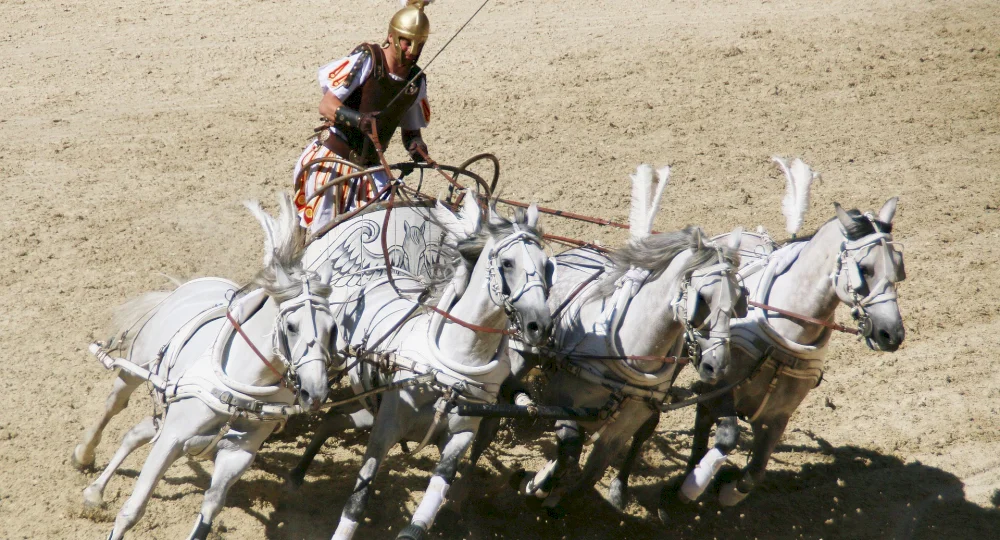
And no, that imagery isn't random. Chariots weren't cute little carriages for Sunday strolls. They were war machines. Fast, deadly, and absolutely terrifying. So yeah, this card means business.
Where the Chariot Comes From (Because History Matters)
Picture this: a battlefield, dust everywhere, horses screaming, and one charioteer cutting through the chaos like a blade. That's the energy we're dealing with.
Chariots first showed up around 3000 BC in Mesopotamia. Then the Greeks and Romans ran with them. These things weren't toys — they were symbols of power, speed, and dominance. If you had a chariot, you meant business.
Fast forward to tarot. A.E. Waite (the Rider-Waite guy) wrote in 1910 that the Chariot stood for "succor, providence, war, triumph, presumption, vengeance, and trouble." That's a lot packed into one card.
But here's the thing: over time, the meaning shifted. What started as literal victory on a battlefield turned into something deeper — inner victory. Mastering yourself instead of just conquering other people.
What You're Actually Looking At On The Card
Let me walk you through the symbols. Because once you see them, you can't unsee them.
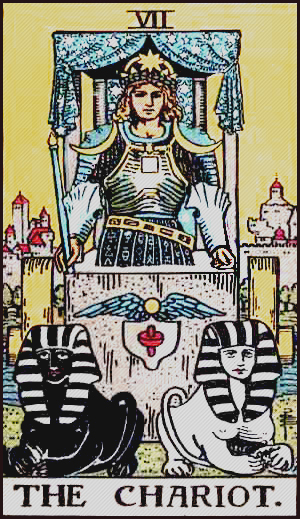
The Charioteer
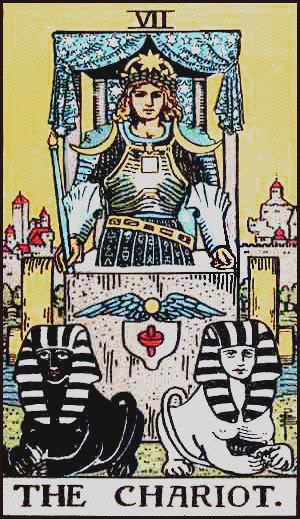
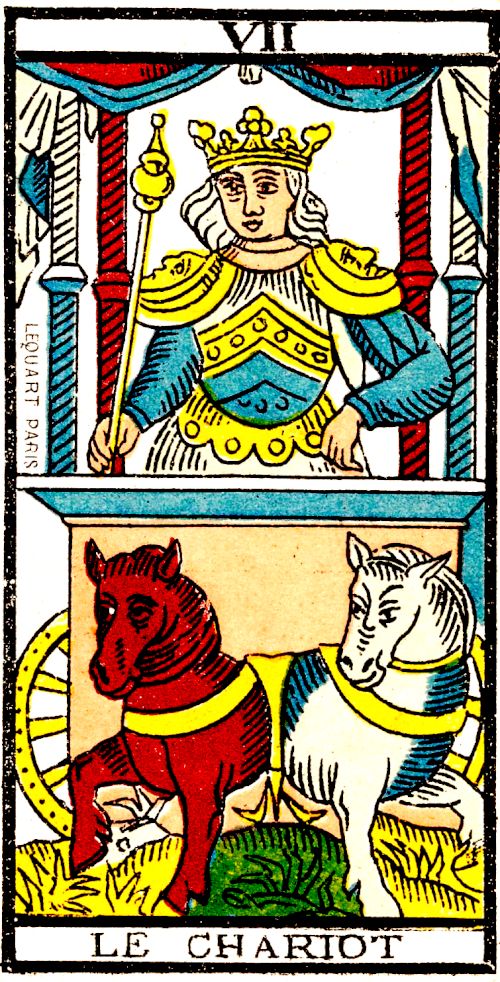
Dude (or figure) is wearing armor and a crown. Translation: protected willpower. This person can take a hit and keep moving. The way they sit — confident, facing forward — tells you they're not here to mess around.
The Sphinxes or Horses
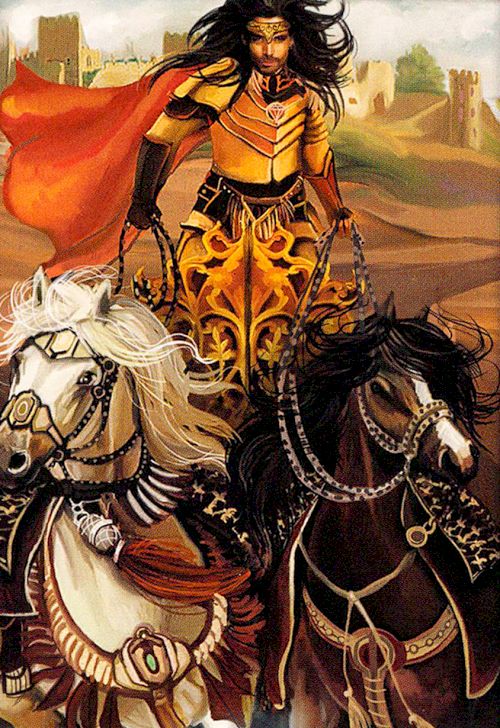
Here's where it gets interesting. Most decks show two creatures pulling the chariot in opposite directions. Sometimes they're different colors. Light and dark. Yin and yang. Your head and your heart. The point isn't that one is good and one is bad. The point is you have to learn to handle both.
If you can't control them, you go nowhere. If you overcontrol them, they rebel. So the charioteer isn't just strong — they're skilled.
The Crown and Canopy
Look up. See that starry canopy or crown? That's not decoration. It means you're not doing this alone. Cosmic backup. Spiritual GPS. Whatever you want to call it — there's something bigger helping you steer.
Key Symbols in the Chariot Card: Different Tarot Traditions.
| Symbol | Appearance | Traditional Meaning |
|---|---|---|
| Charioteer | Armored, crowned, holding reins | Willpower, control, mastery, self-discipline |
| Sphinxes/Horses | Two, often contrasting colors | Opposing forces, duality, balance, integration |
| Crown/Canopy | Celestial, adorning charioteer or chariot | Cosmic protection, divine guidance, spiritual support |
| Chariot | Moving forward | Progress, journey, controlled movement |
| Armor | Protective covering | Defense, resilience, overcoming obstacles |
How The Meaning Has Changed Over Time
Here's something most people don't know. The Chariot hasn't always meant what it means today.
Early days: Victory in battle. Winning. Dominating. Very external. Very "I crushed my enemies."
19th/20th century: Enter the esoteric crowd. Eliphas Lévi linked the Chariot to the Hebrew letter Zayin, which represents spiritual warfare. A.E. Waite added layers about providence (divine help) and presumption (don't get cocky).
Now: It's about inner mastery. Managing your own contradictions. Focusing your will on growth, not just winning arguments or getting promoted. The battlefield is inside you.
And honestly? That shift makes sense. Most of us aren't fighting literal wars. But we are fighting distraction, doubt, fear, and our own bad habits. That's the Chariot's real arena.
When the Chariot Shows Up Upright: Good News, But Don't Get Lazy
Upright Chariot is generally a green light. But here's the catch — it's not a free pass. It's saying: you have the tools, now use them.
At work — obstacles are beatable. That promotion, that project, that impossible deadline? You've got momentum. But momentum only helps if you actually move.
In relationships — this card often means managing differences. You and your partner might be pulling in different directions. That's fine. The question is: can you steer without crashing?
For personal growth — the Chariot is a call to focus. Pick one thing. Stop scattering your energy like confetti. What's the one battle you need to win right now?
Timing matters too. This card often shows up when the moment is right for decisive action. Not next week. Not when you're less scared. Now.
But here's the warning — balanced control. Don’t hold onto the reins so tightly your hands cramp. Don’t overexert yourself into burnout. The best charioteers know when to pull back and let the horses breathe.
The following table breaks down the Chariot's influence on different life areas.
| Life Area | Chariot's Influence | Key Message |
|---|---|---|
| Career | Overcoming professional obstacles, pursuing new opportunities | Focus your determination to achieve your ambitions. |
| Relationships | Managing complex dynamics, setting healthy boundaries | Take control of communication and assert your needs. |
| Personal Growth | Focusing willpower on self-improvement, overcoming personal challenges | Direct your energy towards achieving inner balance and strength. |
When the Chariot Reverses: Oof. Let's Pause.
Reversed Chariot isn't a disaster. But it is a mirror. And what it's reflecting isn't pretty.
Scattered energy — You're being pulled in twelve directions and going nowhere fast. Sound familiar?
Loss of direction — You don't actually know what you want anymore. Or you do, but you've lost sight of it.
Overcontrol — You're pushing too hard. Micromanaging. Trying to force something that needs to breathe. That never ends well.
So what do you do?
- Stop. Just stop. Meditate. Walk. Stare at a wall. Do nothing until you remember what actually matters.
- Zoom out. The charioteer on the battlefield doesn't just charge. They survey. They adjust. Do that.
- Re-evaluate your goals. Are you climbing the wrong mountain? Because if you are, more willpower won't help. It'll just get you lost faster.
The reversed Chariot isn't punishment. It's a pit stop. Take it.
Using the Chariot's Energy In Real Life
You don't need a tarot deck to work with this card. Here's how you live it.
Visualization
Close your eyes. See yourself holding those reins. Feel the weight. Feel the pull of the horses. Now imagine getting them to move together. That's the feeling you're after.
Journaling prompts
What's pulling you in two directions right now? Where are you using too much force? Where are you using too little? What would "balanced control" actually look like today?
Daily willpower exercises
Set one intention in the morning. Just one. Break down one big goal into stupidly small steps. Make one conscious decision today instead of running on autopilot.
Recognize Chariot moments
When you're facing a hard choice, when you feel scattered, when you know what you need to do but can't make yourself do it — that's when you call on this card. Visualize it. Say its name. Whatever works. Just remind yourself: you have the reins.
The Bottom Line
The Chariot isn't about being the strongest or the loudest or the most aggressive person in the room. It's about being the steadiest. The one who can hold opposing forces together and still move forward.
Some days you'll nail it. Some days the horses will bolt. That's fine. The card isn't asking for perfection. It's asking you to keep showing up, keep holding the reins, and keep learning how to steer.
Want to know where the Chariot is steering you? Head to Advanced Tarot Online and pull some cards.
Pete Perry
20 years. Still learning.